Papers coauthored with Brian Zhou
Publications
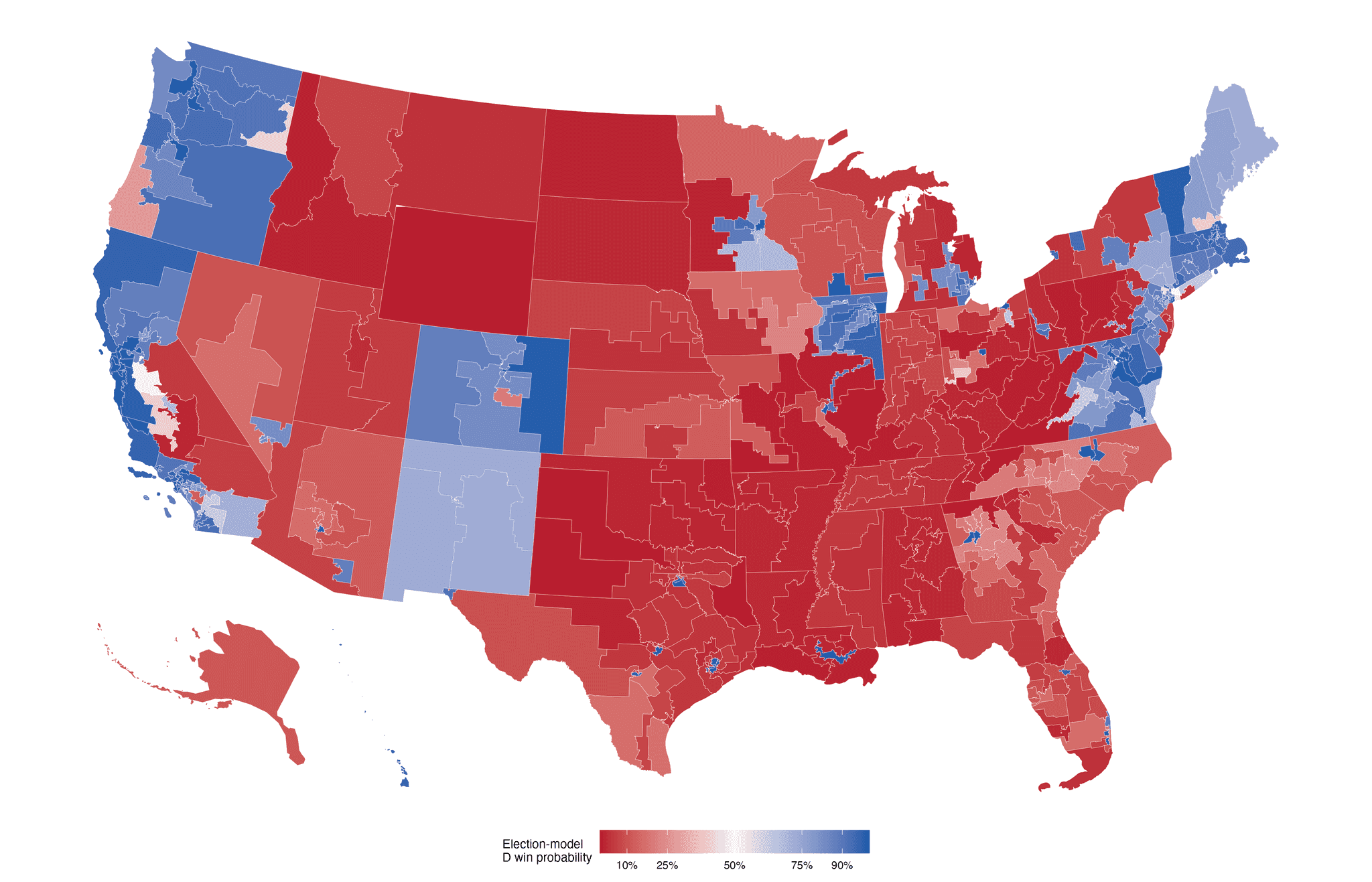
In April 2026, the US Supreme Court issued the Louisiana v. Callais decision, weakening the Voting Rights Act (VRA). We estimate the impact of the Callais decision on minority representation and electoral competition in the US House under two scenarios: (1) congressional district boundaries are drawn in a race-blind, nonpartisan manner without complying with the pre-Callais VRA requirements and (2) both parties engage in partisan gerrymandering to maximize their seat shares without considering former VRA protections. Our analysis uses simulation algorithms to generate alternative redistricting plans under these scenarios while satisfying traditional redistricting principles and state-specific criteria. First, we show that in aggregate the pre-Callais interpretation of the VRA created similar levels of minority representation to race-blind nonpartisan redistricting, suggesting that the VRA did not create large partisan advantages. Next, we show that if states continue to aggressively gerrymander, the Callais decision is likely to benefit the Republican Party and reduce minority representation in Congress. The greatest reductions in minority representation occur in Southern states with large and geographically concentrated Black populations. Finally, these gerrymandered plans further reduce the already low levels of electoral competition in congressional elections.
@misc{kenny2026callais,
  author = {Kenny, Christopher T. and Zhou, Brian and Simko, Tyler and Imai, Kosuke},
  title  = {Weakening the Voting Rights Act Reduces Minority Representation and Electoral Competition},
  year   = {2026},
  month  = jun,
  note   = {Christopher T. Kenny and Brian Zhou contributed equally}
}- Why Neutral Maps Could Empower Black Voters as Much as the Voting Rights Actin The New York Times (The Upshot)
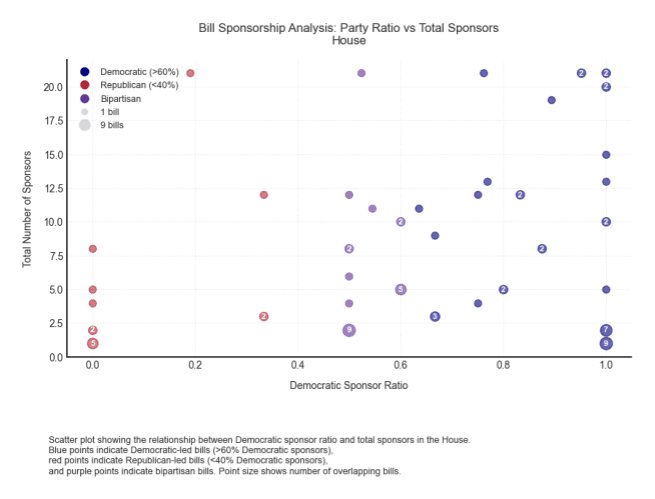
The accelerated adoption of Artificial Intelligence marks a pivotal moment in technological progress. AI is reshaping industries, redefining labor markets, and prompting critical societal reflections on intelligence, reasoning, and the dissemination of information. While AI offers opportunities for economic growth, it also presents risks that must be managed to avoid adverse societal and geopolitical outcomes, making effective and transparent governance more urgent than ever. This paper explores the potential of dynamic, collaborative public-private governance to foster safe innovation. Drawing from primary research, including interviews with tech industry leaders, U.S. Members of Congress, and staff, and an analysis of 150 AI-related bills introduced by the 118th U.S. Congress, this work identifies emerging areas of alignment between policymakers and industry stakeholders. It also highlights opportunities for a unified national approach, despite the challenges of a fragmented legislative environment. The authors propose a dynamic governance approach that brings government and industry together while combining the foresight of ex-ante measures with the adaptability needed to address technological advancements. Coupled with existing ex-post mechanisms, the Dynamic Governance Model creates a comprehensive framework to promote competition, innovation, and accountability. It represents a policy-agnostic extra-regulatory framework, including a public-private partnership for standards setting and a market-based ecosystem for audit and compliance. Ultimately, this governance approach can provide regulatory clarity and predictability, fostering an environment where businesses and innovation thrive while mitigating the risks inherent to AI’s transformative power.
@techreport{carvao2024governance,
  author       = {Carv{~a}o, Paulo and Ancheva, Slavina and Atir, Yam and Jeloka, Shaurya and Zhou, Brian},
  title        = {Governance at a Crossroads: Artificial Intelligence and the Future of Innovation in America},
  institution  = {Mossavar-Rahmani Center for Business and Government, Harvard Kennedy School},
  type         = {M-RCBG Associate Working Paper},
  number       = {251},
  year         = {2025},
  address      = {Cambridge, MA},
  url          = {https://www.hks.harvard.edu/centers/mrcbg/publications/awp/awp251}
},
}- AI at the Brink: Preventing the Subversion of Democracyin Tech Policy Press
- A Dynamic Governance Model for AIin Lawfare
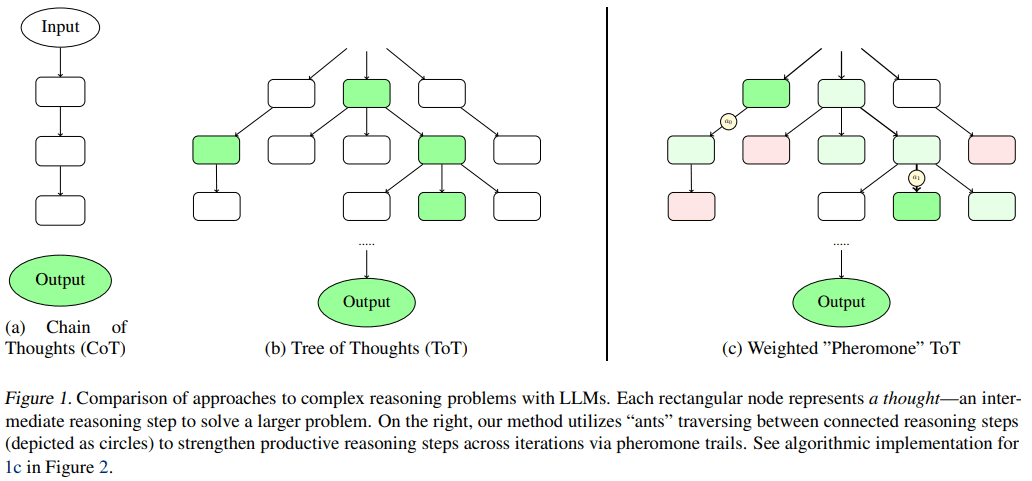
Large Language Models (LLMs) have demonstrated remarkable reasoning capabilities through chain-of-thought prompting, yet discovering effective reasoning methods for complex problems remains challenging due to the vast space of possible intermediate steps. We introduce Ant Colony Optimization-guided Tree of Thought (ACO-ToT), a novel algorithm that combines ACO with LLMs to discover optimal reasoning paths for complex problems efficiently. Drawing inspiration from Hebbian learning in neurological systems, our method employs a collection of distinctly fine-tuned LLM "ants" to traverse and lay pheromone trails through a centralized tree of thought, with each ant's movement governed by a weighted combination of existing pheromone trails and its own specialized expertise. The algorithm evaluates complete reasoning paths using a mixture-of-experts-based scoring function, with pheromones reinforcing productive reasoning paths across iterations. Experiments on three challenging reasoning tasks (GSM8K, ARC-Challenge, and MATH) demonstrate that ACO-ToT performs significantly better than existing chain-of-thought optimization approaches, suggesting that incorporating biologically inspired collective search mechanisms into LLM inference can substantially enhance reasoning capabilities.
@misc{chari2025pheromonebasedlearningoptimalreasoning,
      title={Pheromone-based Learning of Optimal Reasoning Paths},
      author={Anirudh Chari and Aditya Tiwari and Richard Lian and Suraj Reddy and Brian Zhou},
      year={2025},
      eprint={2501.19278},
      archivePrefix={arXiv},
      primaryClass={cs.CL},
      url={https://arxiv.org/abs/2501.19278},
}
MINDSTORES: Memory-Informed Neural Decision Synthesis for Task-Oriented Reinforcement in Embodied Systems
While large language models (LLMs) have shown promising capabilities as zero-shot planners for embodied agents, their inability to learn from experience and build persistent mental models limits their robustness in complex open-world environments like Minecraft. We introduce MINDSTORES, an experience-augmented planning framework that enables embodied agents to build and leverage mental models through natural interaction with their environment. Drawing inspiration from how humans construct and refine cognitive mental models, our approach extends existing zero-shot LLM planning by maintaining a database of past experiences that informs future planning iterations. The key innovation is representing accumulated experiences as natural language embeddings of (state, task, plan, outcome) tuples, which can then be efficiently retrieved and reasoned over by an LLM planner to generate insights and guide plan refinement for novel states and tasks. Through extensive experiments in the MineDojo environment, a simulation environment for agents in Minecraft that provides low-level controls for Minecraft, we find that MINDSTORES learns and applies its knowledge significantly better than existing memory-based LLM planners while maintaining the flexibility and generalization benefits of zero-shot approaches, representing an important step toward more capable embodied AI systems that can learn continuously through natural experience.
@misc{chari2025mindstoresmemoryinformedneuraldecision,
      title={MINDSTORES: Memory-Informed Neural Decision Synthesis for Task-Oriented Reinforcement in Embodied Systems},
      author={Anirudh Chari and Suraj Reddy and Aditya Tiwari and Richard Lian and Brian Zhou},
      year={2025},
      eprint={2501.19318},
      archivePrefix={arXiv},
      primaryClass={cs.AI},
      url={https://arxiv.org/abs/2501.19318},
}
Insights into Flexible Bioinspired Fins for Unmanned Underwater Vehicle Systems through Deep Learning
The last few decades have led to the rise of research focused on propulsion and control systems for bio-inspired unmanned underwater vehicles (UUVs), which provide more maneuverable alternatives to traditional UUVs in underwater missions. Recent work has explored the use of time-series neural network surrogate models to predict thrust and power from vehicle design and fin kinematics. We expand upon this work, creating new forward neural network models that encapsulate the effects of the material stiffness of the fin on its kinematic performance, thrust, and power, and are able to interpolate to the full spectrum of kinematic gaits for each material. Notably, we demonstrate through testing of holdout data that our developed forward models capture the thrust and power associated with each set of parameters with high resolution, enabling highly accurate predictions of previously unseen gaits and thrust and FOM gains through proper materials and kinematics selection. As propulsive efficiency is of utmost importance for flapping-fin UUVs in order to extend their range and endurance for essential operations, a non-dimensional figure of merit (FOM), derived from measures of propulsive efficiency, is used to evaluate different fin designs and kinematics and allow for comparison with other bio-inspired platforms. We use the developed FOM to analyze optimal gaits and compare the performance between different fin materials. The forward model demonstrates the ability to capture the highest thrust and FOM with good precision, which enables us to improve thrust generation by 83.89% and efficiency by 137.58% with proper fin stiffness and kinematics selection, allowing us to improve material selection for bio-inspired fin design.
@Article{biomimetics9070434,
AUTHOR = {Zhou, Brian and Viswanath, Kamal and Geder, Jason and Sharma, Alisha and Lee, Julian},
TITLE = {Insights into Flexible Bioinspired Fins for Unmanned Underwater Vehicle Systems through Deep Learning},
JOURNAL = {Biomimetics},
VOLUME = {9},
YEAR = {2024},
NUMBER = {7},
ARTICLE-NUMBER = {434},
URL = {https://www.mdpi.com/2313-7673/9/7/434},
PubMedID = {39056875},
ISSN = {2313-7673},
ABSTRACT = {The last few decades have led to the rise of research focused on propulsion and control systems for bio-inspired unmanned underwater vehicles (UUVs), which provide more maneuverable alternatives to traditional UUVs in underwater missions. Recent work has explored the use of time-series neural network surrogate models to predict thrust and power from vehicle design and fin kinematics. We expand upon this work, creating new forward neural network models that encapsulate the effects of the material stiffness of the fin on its kinematic performance, thrust, and power, and are able to interpolate to the full spectrum of kinematic gaits for each material. Notably, we demonstrate through testing of holdout data that our developed forward models capture the thrust and power associated with each set of parameters with high resolution, enabling highly accurate predictions of previously unseen gaits and thrust and FOM gains through proper materials and kinematics selection. As propulsive efficiency is of utmost importance for flapping-fin UUVs in order to extend their range and endurance for essential operations, a non-dimensional figure of merit (FOM), derived from measures of propulsive efficiency, is used to evaluate different fin designs and kinematics and allow for comparison with other bio-inspired platforms. We use the developed FOM to analyze optimal gaits and compare the performance between different fin materials. The forward model demonstrates the ability to capture the highest thrust and FOM with good precision, which enables us to improve thrust generation by 83.89% and efficiency by 137.58% with proper fin stiffness and kinematics selection, allowing us to improve material selection for bio-inspired fin design.},
DOI = {10.3390/biomimetics9070434}
}
Analyzing Post-COVID-19 Changes to Voter Behavior and Early Voting Trends in Virginia
Power-Aware Inverse-Search Machine Learning for Low Resource Multi-Objective Unmanned Underwater Vehicle Control
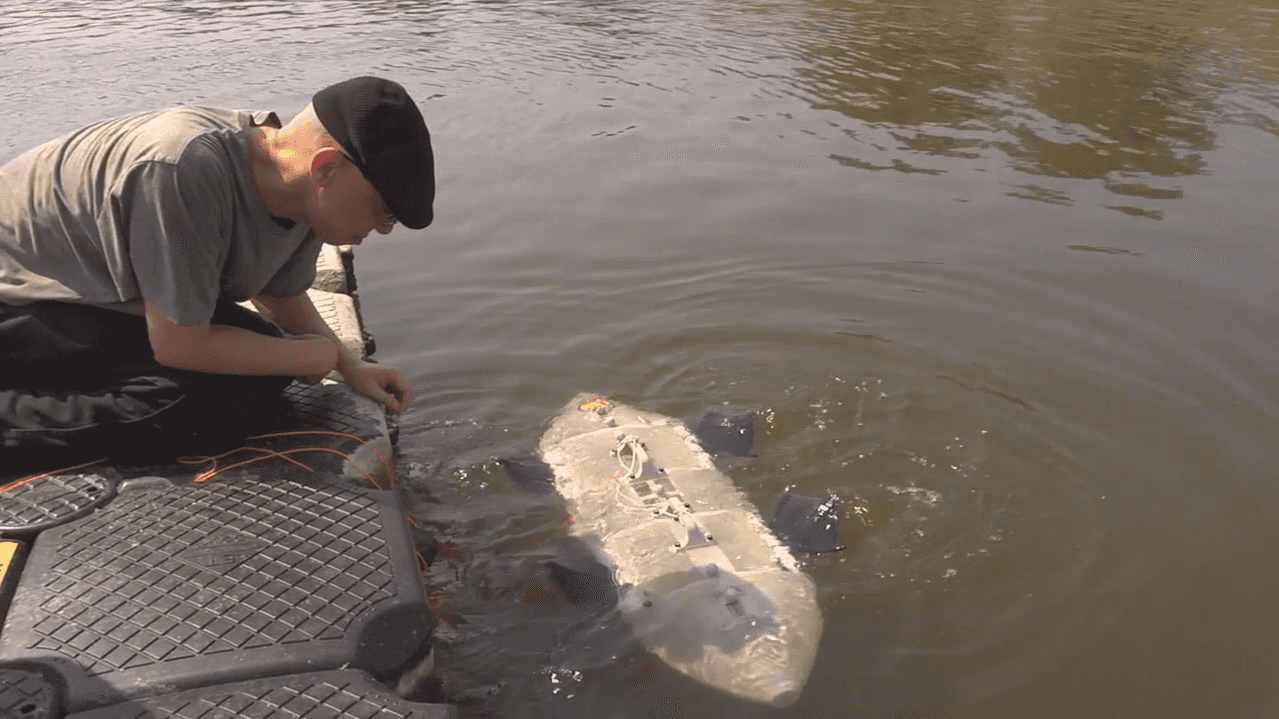
Flapping-fin unmanned underwater vehicle (UUV) propulsion systems enable high maneuverability for tasks ranging from station-keeping to surveillance but are often constrained by their limited computational power and battery capacity. Previous research has demonstrated that time-series neural network models can accurately predict the thrust and power of certain fin kinematics based on the specified gait coupled with the fin configuration, but can not fit an inverse neural network that takes a thrust request and tunes the kinematics by weighting thrust generation, smooth movement transitions, and power attributes. We study various combinations of the three weights and fin materials to create different 'modes' of movement for a multi-objective UUV, based on controller intent using an inverse neural network. Finally, we implement and validate an enhanced power-aware inverse model by benchmarking on the Raspberry Pi Model 4B system and testing through generated simulated movements.
@article{Zhou_Geder_Viswanath_Sharma_Lee_2024, title={Power-Aware Inverse-Search Machine Learning for Low Resource Multi-Objective Unmanned Underwater Vehicle Control (Student Abstract)}, volume={38}, url={https://ojs.aaai.org/index.php/AAAI/article/view/30538}, DOI={10.1609/aaai.v38i21.30538}, abstractNote={Flapping-fin unmanned underwater vehicle (UUV) propulsion systems enable high maneuverability for tasks ranging from station-keeping to surveillance but are often constrained by their limited computational power and battery capacity. Previous research has demonstrated that time-series neural network models can accurately predict the thrust and power of certain fin kinematics based on the specified gait coupled with the fin configuration, but can not fit an inverse neural network that takes a thrust request and tunes the kinematics by weighting thrust generation, smooth movement transitions, and power attributes. We study various combinations of the three weights and fin materials to create different 'modes' of movement for a multi-objective UUV, based on controller intent using an inverse neural network. Finally, we implement and validate an enhanced power-aware inverse model by benchmarking on the Raspberry Pi Model 4B system and testing through generated simulated movements.}, number={21}, journal={Proceedings of the AAAI Conference on Artificial Intelligence}, author={Zhou, Brian and Geder, Jason and Viswanath, Kamal and Sharma, Alisha and Lee, Julian}, year={2024}, month={Mar.}, pages={23714-23716} }- AAAI 2024 Outstanding Student AbstractRecognized for exceptional contribution to AI research in power-aware machine learning for underwater robotics.
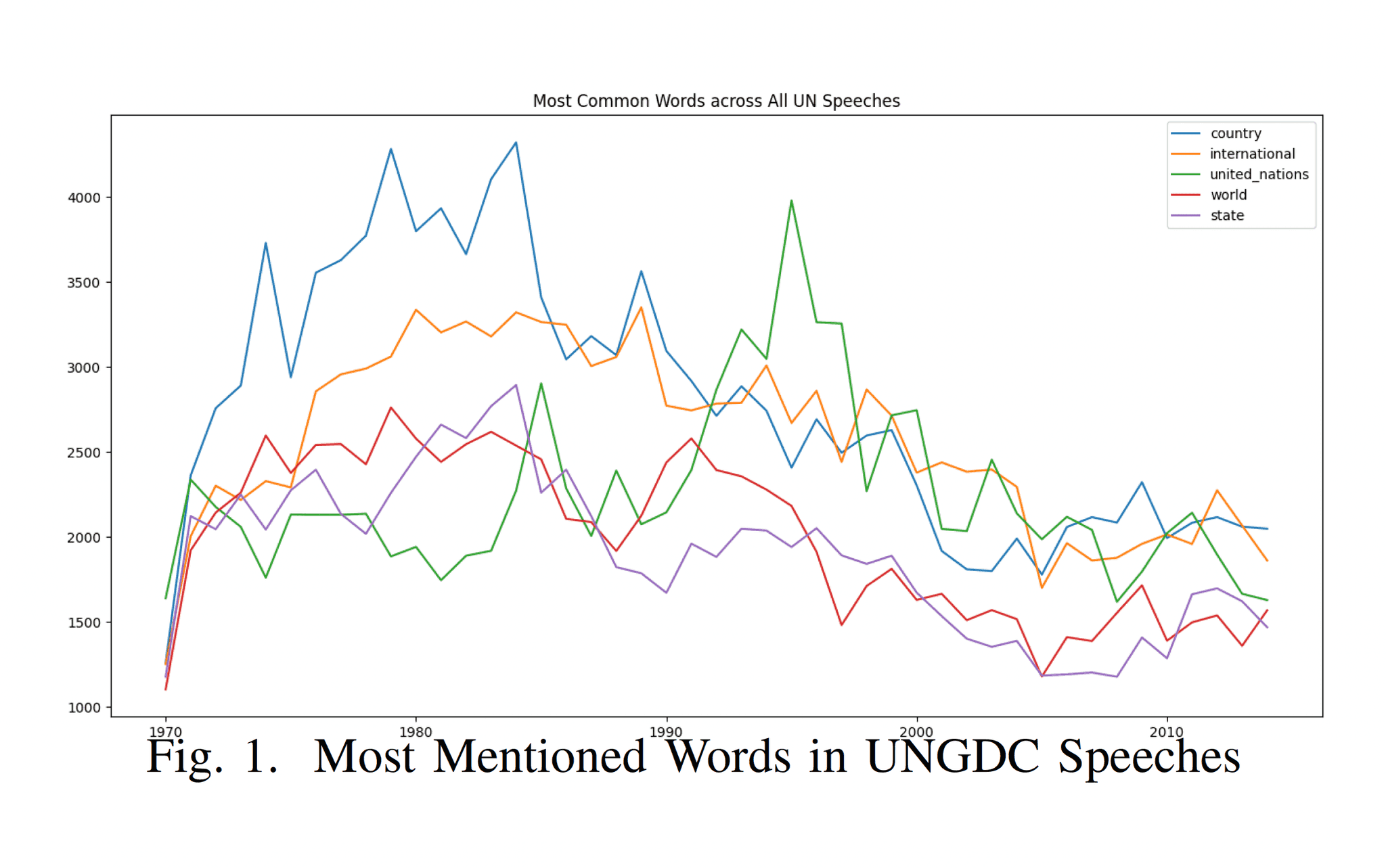
Analyzing the Discourse in the UN for Crisis Response in Post-Colonial Africa
The effectiveness of international bodies such as the United Nations (UN) at addressing global crises has been debated. The updated UN General Debate Corpus (UNGDC) catalogues every speech from the UN's inception in 1946 to 2022. Using the corpus as an indicator of debate, we explore how African post-colonial states grow influence on the international stage. As these states join the UN immediately after independence, we superimpose historical events on metrics generated from UNGDC to demonstrate the corpus' robustness for forecasting shifts in international priorities. We develop a time series of relevance for each country using natural language processing methods to extract features and tokenize speeches. We conclude that the UNGD preludes intervention in multi-year violent conflicts, with insights into the efficacy of crisis resolution measures in Africa. Our results are established by computational experiments, with conditions validated by statistical significance tests.
@INPROCEEDINGS{10534975,
  author={Arulandu, Alvan Caleb and Zhou, Brian},
  booktitle={2023 IEEE MIT Undergraduate Research Technology Conference (URTC)},
  title={Analyzing the Discourse in the UN for Crisis Response in Post-Colonial Africa},
  year={2023},
  volume={},
  number={},
  pages={1-5},
  keywords={Measurement;Time series analysis;Africa;Feature extraction;Robustness;Natural language processing;Speech processing;United Nations;UN General Assembly General Debate;UN General Debate Corpus;political communication;text as data;natural language processing},
  doi={10.1109/URTC60662.2023.10534975}}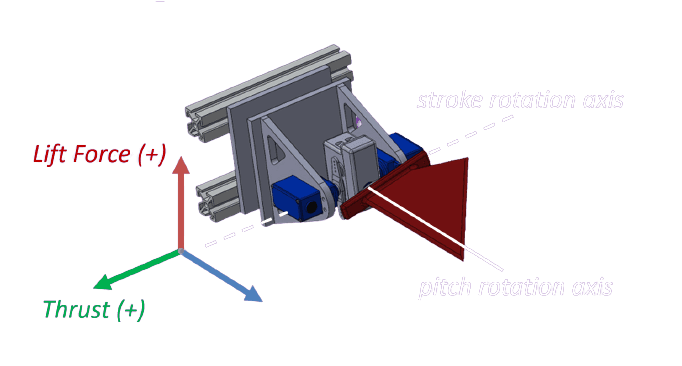
Data-Driven Machine Learning Models for a Multi-Objective Flapping Fin Unmanned Underwater Vehicle Control System
Flapping-fin unmanned underwater vehicle (UUV) propulsion systems provide high maneuverability for naval tasks such as surveillance and terrain exploration. Recent work has explored the use of time-series neural network surrogate models to predict thrust from vehicle design and fin kinematics. We develop a search-based inverse model that leverages a kinematics-to-thrust neural network model for control system design. Our inverse model finds a set of fin kinematics with the multi-objective goal of reaching a target thrust and creating a smooth kinematic transition between flapping cycles. We demonstrate how a control system integrating this inverse model can make online, cycle-to-cycle adjustments to prioritize different system objectives.
@article{Lee_Viswanath_Sharma_Geder_Pruessner_Zhou_2024, title={Data-Driven Machine Learning Models for a Multi-Objective Flapping Fin Unmanned Underwater Vehicle Control System}, volume={37}, url={https://ojs.aaai.org/index.php/AAAI/article/view/26863}, DOI={10.1609/aaai.v37i13.26863}, abstractNote={Flapping-fin unmanned underwater vehicle (UUV) propulsion systems provide high maneuverability for naval tasks such as surveillance and terrain exploration. Recent work has explored the use of time-series neural network surrogate models to predict thrust from vehicle design and fin kinematics. We develop a search-based inverse model that leverages a kinematics-to-thrust neural network model for control system design. Our inverse model finds a set of fin kinematics with the multi-objective goal of reaching a target thrust and creating a smooth kinematic transition between flapping cycles. We demonstrate how a control system integrating this inverse model can make online, cycle-to-cycle adjustments to prioritize different system objectives.}, number={13}, journal={Proceedings of the AAAI Conference on Artificial Intelligence}, author={Lee, Julian and Viswanath, Kamal and Sharma, Alisha and Geder, Jason and Pruessner, Marius and Zhou, Brian}, year={2024}, month={Jul.}, pages={15703-15709} }
Licensing Training Data and Attributing Copyright of Derivative Content From Large Language Models Can Resolve Up- and Downstream Copyright Issues
Issues over the copyright of Large Language Models (LLMs) have emerged on two fronts: using copyrighted Intellectual Property (IP) in training data, and the ownership of generated content from LLMs. We propose adopting an opt-in system for IP owners with fair compensation determined by tagging metadata. We first suggest the development of new, multimodal approaches for calculating substantial similarity within generated derivative works by using tags for both content and style. From here, compensation and attribution can be calculated and determined, allowing for a generated work to be licensed and copyrighted while providing a financial incentive to opt-in. This system can allow for the ethical usage of IP and resolve copyright disputes over generated content.
Computational Approaches for Modeling Power Consumption on an Underwater Flapping Fin Propulsion System
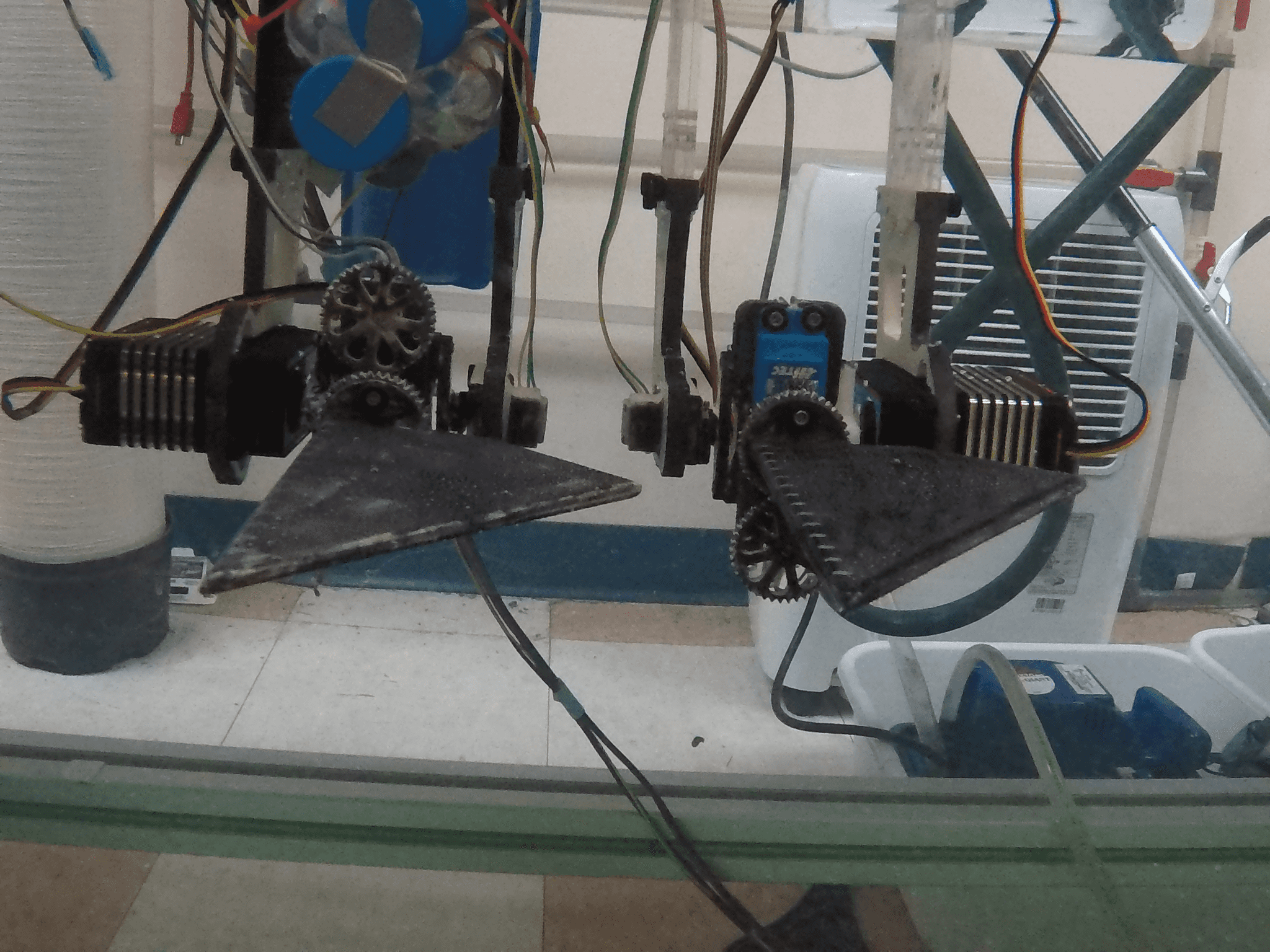
The last few decades have led to the rise of research focused on propulsion and control systems for bio-inspired unmanned underwater vehicles (UUVs), which provide more maneuverable alternatives to traditional UUVs in underwater missions. Propulsive efficiency is of utmost importance for flapping-fin UUVs in order to extend their range and endurance for essential operations. To optimize for different gait performance metrics, we develop a non-dimensional figure of merit (FOM), derived from measures of propulsive efficiency, that is able to evaluate different fin designs and kinematics, and allow for comparison with other bio-inspired platforms. We create and train computational models using experimental data, and use these models to predict thrust and power under different fin operating states, providing efficiency profiles. We then use the developed FOM to analyze optimal gaits and compare the performance between different fin materials. These comparisons provide a better understanding of how fin materials affect our thrust generation and propulsive efficiency, allowing us to inform control systems and weight for efficiency on an inverse gait-selector model.
@misc{zhou2023computationalapproachesmodelingpower,
      title={Computational Approaches for Modeling Power Consumption on an Underwater Flapping Fin Propulsion System},
      author={Brian Zhou and Jason Geder and Alisha Sharma and Julian Lee and Marius Pruessner and Ravi Ramamurti and Kamal Viswanath},
      year={2023},
      eprint={2310.14135},
      archivePrefix={arXiv},
      primaryClass={cs.RO},
      url={https://arxiv.org/abs/2310.14135},
}
Identification of Ocular Biomarkers for the Development of an Early Stage Diagnostic Tool for Neurodegenerative Disease
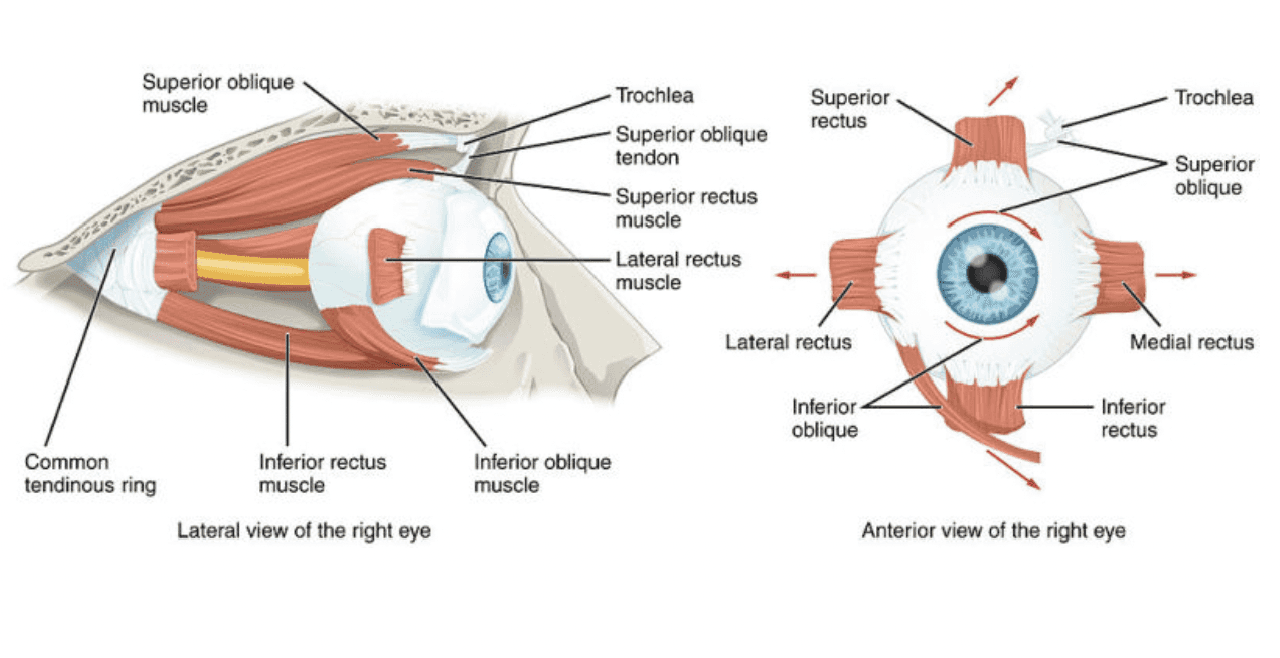
Current methods of diagnosis for neurodegenerative diseases are almost purely qualitative and highly apparent only when extensive neuronal dystrophy and degeneration have occurred. Therefore, creating a clinically viable tool that leverages early biomarkers of neurodegenerative disease is necessary. Past research indicates that ocular biomarkers are a potential source of quantitative assessment for the early diagnosis of neurodegenerative disease. In this paper, we identify specific ocular biomarkers that could be used as a basis for the early detection of neurodegenerative disease, potentially using machine learning techniques. Furthermore, we outline data collection procedures that can be implemented for patients completing Pro-Saccade, Anti-Saccade, Express-Saccadic, and Smooth Pursuit tasks. We expect that the findings in this paper can be utilized to guide the future creation of tools and datasets for developing a gaze-based diagnostic tool.
Working Papers
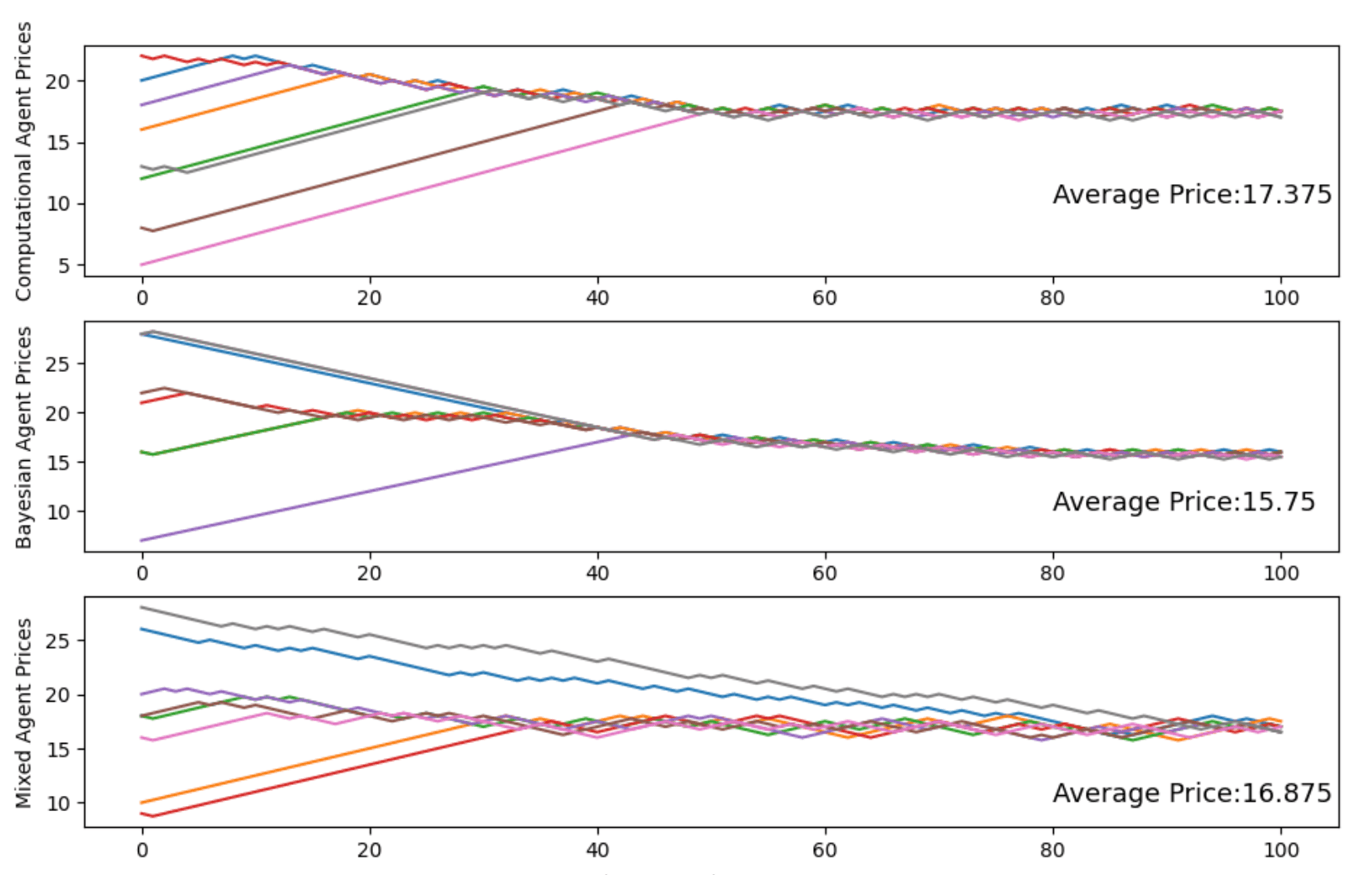
Development of Quantum Machine Learning Agents to Model Simple Economies
Agent-based modeling can study any social behavior and decision-making process, as agents make decisions based on an internal logic network and try to imitate human behavior. Proponents say that models based on agent interactions can inspire insight into policy and predict aggregate human behavior. Detractors concern themselves with the applicability of these results and whether such agents can fundamentally capture the nuance of human behavior. The solution lies in additional scale and complexity, often expensive to simulate and impossible with current computational methods for simulation. In this paper, we explore a new approach to agent-based modeling incorporating the properties of quantum mechanics and quantum computing. We build quantum adaptive long-term learning agents to measure the influence of external stimuli on a simple business structure comprised of those agents and evaluate the performance benefits from a quantum approach, comparing results with conventional Bayesian and Computational agents.
Policy

Recommendations for Increased Financial Literacy in American High Schools
This paper examines the current landscape of financial literacy within the context of secondary schools, youth, and adolescents. For this paper, financial literacy can be defined as the ability to use financial knowledge and skills to manage financial resources effectively for a lifetime of well-being. Our literature review highlights three main issues in current practices: curriculum standardization, methodological differences in measuring financial literacy, and lack of long-term retention in youth as they grow older. Current assessment methods vary widely, financial literacy education is not completely effective, and many results were not deemed statistically significant due to small sample sizes and a small number of available studies. The absence of available data underscores the importance of a more standardized system with better analytical methodology to assess financial literacy. To address these issues, this paper proposes several solutions. We recommend standardized financial literacy curricula that are developed through collaboration with existing institutions, the increase in resources and incentives, and youth advocacy programs and government efforts can promote financial education and assist with integration into school curricula.
@misc{karim2024financialliteracy,
  title        = {Recommendations for Increased Financial Literacy in American High Schools},
  author       = {Karim, Arik and Tan, Sebastian and Ding, Siyang and Sun, Hanming and Zeng, Jake and Mukund, Varun and Zhou, Brian},
  year         = {2024},
  month        = feb,
  day          = {25},
  howpublished = {SSRN},
  url          = {https://papers.ssrn.com/sol3/papers.cfm?abstract_id=4795120}
}Youth Perspectives and Recommendations for the United Nations's High-Level Advisory Board on Artificial Intelligence
Policy Proposals for the United Kingdom's National Quantum Strategy
Report on High-Speed Rail: Recommendations for a New Era of American Infrastructure
High-speed rail has the potential to revitalize the decaying American passenger rail system and public transit infrastructure at large. However, while other countries have far surpassed America's HSR network, ongoing projects in America face delayed construction, rising costs, legal challenges, and poor support infrastructure. Despite these challenges, HSR still has the potential to revolutionize American transit and revitalize the American economy, offering an alternative to car and air travel, reducing carbon emissions, and connecting vast cities and regions. Support for improved infrastructure enjoys bipartisan support, and the growing political sway of the younger generation is increasingly advocating for improved rail transit. However, actions are needed by the Federal government and state legislatures to allow for these HSR projects to succeed. We analyze the involvement of stakeholders through the development of HSR, their incentive structures and influence, and propose actions that can be taken by governments on the state and federal levels to encourage the growth and development of a national HSR project.
@misc{zhou2023highspeedrail,
  title        = {Report on High-Speed Rail: Recommendations for a New Era of American Infrastructure},
  author       = {Zhou, Brian and Karim, Arik and Zhu, Vivian and Zeng, Jake and Khandelwal, Anant and Chen, Sam and Sun, Hanming and Yenuganti, Venkata and Chen, Zach},
  year         = {2023},
  month        = apr,
  day          = {4},
  howpublished = {SSRN},
  url          = {https://papers.ssrn.com/sol3/papers.cfm?abstract_id=4408880}
}
Report on Minimum Wage: Federal and State Recommendations
The COVID-19 pandemic, paired with increased inflationary pressures, have worsened the labor crisis afflicting millions of minimum wage workers across the United States. Increased minimum wages have the potential to promote upward mobility, and importantly, create a grand vision for equitable pay & treatment of workers in tandem with profit. We analyze the relevant stakeholders to determine the viability of federal minimum wage increases in the United States and suggest comprehensive policy action to catalyze minimum wage increases across the United States to address this labor crisis.
@misc{karim2023minimumwage,
  title        = {Report on Minimum Wage: Federal and State Recommendations},
  author       = {Karim, Arik and Li, Sophia and Wilkes, Ethan and Ram, Shreyes and Zhou, Brian},
  year         = {2023},
  month        = oct,
  day          = {19},
  howpublished = {SSRN},
  url          = {https://papers.ssrn.com/sol3/papers.cfm?abstract_id=4607088}
}
Recommendations to Combat Child Exploitation in Social Media
Social media has exploded in usage amongst children. 50% of parents state that their child has access to some type of social media, with 32% of parents reporting that their children aged 7 to 9 have access to social media. Three quarters of parents have shared the content of their children online. With staggering numbers of children online, child content in social media is increasingly profitable. In 2020, the highest paid YouTube content creator was 9 year old Ryan Kaji, best known for his toy reviews. Content creators like Niki Phillips, DaddyOFive, and Myka Stauffer have all gained significant online followings through their content based on their children. Unfortunately, this creates numerous opportunities for exploitation of the content creator. Family content channels have been accused of physical and emotional abuse of their children in their content. Content creators have also violated the privacy and dignity of neurodivergent or adopted children.
@article{huang2023childexploitation,
  title   = {Recommendations to Combat Child Exploitation in Social Media},
  author  = {Huang, Oliver and Karim, Arik and Zhou, Brian and Zhang, Natalie and Kimberlin, Avery and Lee, Grace and Mukund, Varun},
  journal = {SSRN},
  year    = {2023},
  month   = oct,
  day     = {4},
  url     = {https://papers.ssrn.com/sol3/papers.cfm?abstract_id=4652240}
}
Public Writing
The A.I. Paradigm: Crafting Sustainable Growth for an Intelligent Economy
Artificial intelligence (A.I.) is arguably the most transformative technological advancement of the 21st century. The disruptive technology promises a dangerous crossroads of economic opportunity and productivity, and economists are unable to reach a consensus regarding the long-term implications of such innovation. This paper discusses the current state of A.I. deployment, comparative regional differences in economic development, and sector-specific impacts of A.I. adoption. We identify and address three policy concerns: implementation lag, monopolistic structures, and labor market effects. Throughout, a keen emphasis is placed upon equitable and progressive growth for stakeholders at all levels—a core tenant of any high-quality economy.
@techreport{tan2024aiparadigm,
  author      = {Tan, Sebastian and Wang, Justin and Reddy, Nikhil and Zhou, Brian},
  title       = {The A.I. Paradigm: Crafting Sustainable Growth for an Intelligent Economy},
  institution = {United States National Economics Team, Council for Economic Education},
  year        = {2024},
  month       = jul,
  note        = {2024 Global Economics Challenge, Adam Smith Division}
}The Modern American Research Multiversity
Software

alarmdata: Download, Merge, and Process Redistricting Data
Utility functions to download and process data produced by the ALARM Project, including 2020 redistricting files Kenny and McCartan (2021) https://alarm-redist.org/posts/2021-08-10-census-2020/ and the 50-State Redistricting Simulations of McCartan, Kenny, Simko, Garcia, Wang, Wu, Kuriwaki, and Imai (2022). The package extends the data introduced in McCartan, Kenny, Simko, Garcia, Wang, Wu, Kuriwaki, and Imai (2022) to also include states with only a single district.
@Manual{mccartan2024alarmdata,
  title  = {alarmdata: Download, Merge, and Process Redistricting Data},
  author = {McCartan, Cory and Kenny, Christopher T. and Simko, Tyler and Zhao, Michael and Miyazaki, Sho and Zhou, Brian and Imai, Kosuke},
  year   = {2024},
  note   = {R package},
  doi    = {10.32614/CRAN.package.alarmdata},
  url    = {https://cran.r-project.org/package=alarmdata}
}
Datasets

50-State Redistricting Simulations for the 2020 Redistricting Cycle After Louisiana v. Callais
Every decade following the Census, states and municipalities must redraw districts for Congress, state houses, city councils, and more. The goal of the 50-State Simulation Project is to enable researchers, practitioners, and the general public to use cutting-edge redistricting simulation analysis to evaluate enacted congressional districts. Evaluating a redistricting plan requires analysts to take into account each state's redistricting rules and particular political geography. Comparing the partisan bias of a plan for Texas with the bias of a plan for New York, for example, is likely misleading. Comparing a state's current plan to a past plan is also problematic because of demographic and political changes over time. Redistricting simulations generate an ensemble of alternative redistricting plans within a given state which are tailored to its redistricting rules. Unlike traditional evaluation methods, therefore, simulations are able to directly account for the state's political geography and redistricting criteria. This dataset contains sampled districting plans and accompanying summary statistics for all 50 U.S. states.
@misc{kenny2026fiftystate,
  author    = {Kenny, Christopher T. and Zhou, Brian and Simko, Tyler and Imai, Kosuke},
  title     = {50-State Redistricting Simulations for the 2020 Redistricting Cycle After Louisiana v. Callais},
  year      = {2026},
  publisher = {Harvard Dataverse},
  doi       = {10.7910/DVN/A3SE7Y},
  url       = {https://doi.org/10.7910/DVN/A3SE7Y}
}
Presentations