Governance at a Crossroads: Artificial Intelligence and the Future of Innovation in America
@techreport{carvao2024governance,
  author       = {Carv{~a}o, Paulo and Ancheva, Slavina and Atir, Yam and Jeloka, Shaurya and Zhou, Brian},
  title        = {Governance at a Crossroads: Artificial Intelligence and the Future of Innovation in America},
  institution  = {Mossavar-Rahmani Center for Business and Government, Harvard Kennedy School},
  type         = {M-RCBG Associate Working Paper},
  number       = {251},
  year         = {2025},
  address      = {Cambridge, MA},
  url          = {https://www.hks.harvard.edu/centers/mrcbg/publications/awp/awp251}
},
          }
Abstract
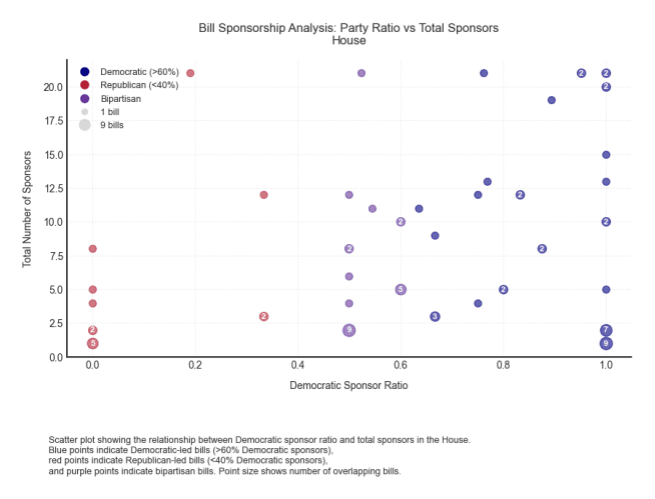
The accelerated adoption of Artificial Intelligence marks a pivotal moment in technological progress. AI is reshaping industries, redefining labor markets, and prompting critical societal reflections on intelligence, reasoning, and the dissemination of information. While AI offers opportunities for economic growth, it also presents risks that must be managed to avoid adverse societal and geopolitical outcomes, making effective and transparent governance more urgent than ever. This paper explores the potential of dynamic, collaborative public-private governance to foster safe innovation. Drawing from primary research, including interviews with tech industry leaders, U.S. Members of Congress, and staff, and an analysis of 150 AI-related bills introduced by the 118th U.S. Congress, this work identifies emerging areas of alignment between policymakers and industry stakeholders. It also highlights opportunities for a unified national approach, despite the challenges of a fragmented legislative environment. The authors propose a dynamic governance approach that brings government and industry together while combining the foresight of ex-ante measures with the adaptability needed to address technological advancements. Coupled with existing ex-post mechanisms, the Dynamic Governance Model creates a comprehensive framework to promote competition, innovation, and accountability. It represents a policy-agnostic extra-regulatory framework, including a public-private partnership for standards setting and a market-based ecosystem for audit and compliance. Ultimately, this governance approach can provide regulatory clarity and predictability, fostering an environment where businesses and innovation thrive while mitigating the risks inherent to AI’s transformative power.
See also
- Weakening the Voting Rights Act reduces minority representation and electoral competitionPreprint, 2026
- Pheromone-based Learning of Optimal Reasoning PathsarXiv, 2025
- MINDSTORES: Memory-Informed Neural Decision Synthesis for Task-Oriented Reinforcement in Embodied SystemsICLR Workshop on Reasoning and Planning for LLMs; arXiv, 2025
- Insights into Flexible Bioinspired Fins for Unmanned Underwater Vehicle Systems through Deep LearningBiomimetics; NeurIPS Workshop on Machine Learning and the Physical Sciences, 2024
- A Framework to Apply Natural Language Processing Techniques to Analyze Public Opinions on Peace and Governance in AfricaAAPOR Conference, 2024